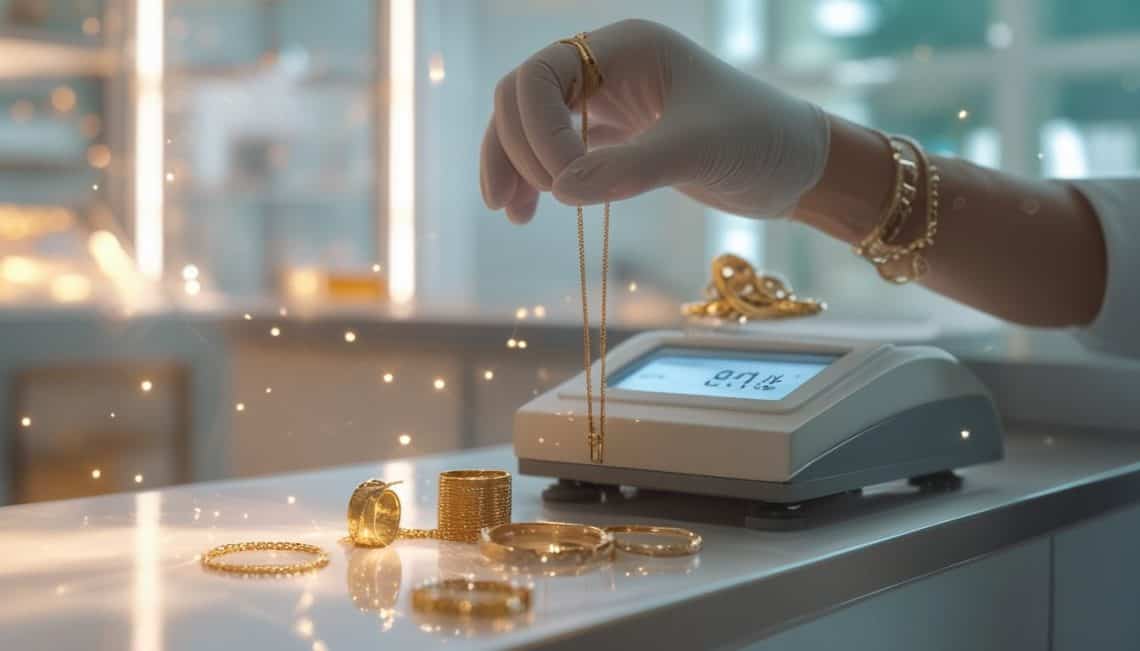
What a Gold Test Final Result Means
A pawn shop gold test final result shows the shop’s final purity estimate and helps explain how your gold offer is calculated.
How results are reported
The result may appear as karat, fineness, percentage purity, or an element breakdown. For example, 14K, 585 fineness, and 58.5% gold all describe the same basic purity level, while alloy metals such as copper, silver, nickel, or zinc may explain colour, durability, and resale value. Related source: pawn shop gold test final result.
A final reading is often based on several checks, not just one test. A Malaysian pawn shop may combine visual inspection, magnet testing, acid scratch testing, electronic testing, density checks, or XRF readings before deciding whether an item is solid gold, plated, filled, hollow, repaired, or mixed with other metals.
Common Testing Methods and How to Read the Numbers
Quick checks are usually the first stage because they are fast and inexpensive. Hallmarks, wear patterns, colour changes, and magnet response can reveal useful clues, while an acid scratch test gives a pass-fail style indication of whether the item appears to meet a certain karat level.
Karat, fineness, percentage, and equipment output
More structured tools can provide clearer outputs. Electronic testers estimate karat from conductivity, density meters compare weight and volume, and XRF machines can show surface elemental percentages, although thick plating or unusual construction may still affect interpretation. Related source: how do pawn shops test gold.
Karat is based on 24 parts, so 18K is 75% gold and is commonly written as 750 fineness. Similarly, 14K is often 585 fineness, or 58.5% gold, while 9K is usually 375 fineness, or 37.5% gold. Understanding these conversions makes the final report easier to compare across shops.
How the Result Affects the Offer and What to Ask
The offer normally starts with purity, weight, and the current gold spot price because only the pure gold portion carries bullion value. The shop may then deduct for testing, handling, risk, resale margin, damage, repairs, or whether the piece is likely to be sold as scrap rather than jewellery.
Documentation, reliability, and second opinions
Before accepting an offer, ask which method was used, whether the equipment was calibrated, who performed the test, and whether you can receive a printed result, stamped report, screen photo, or receipt showing the item description, weight, purity, date, and agreed amount.
If the reading seems wrong, ask for a re-test, supervisor review, or alternate method before leaving. For valuable items, consider an independent jeweller, assay office, or laboratory report so you can compare results and negotiate with clearer evidence.